Conversation search breaks
Why looking something up can break a good conversation
Search is useful. The problem is timing. In a live conversation, the moment you stop to look something up is often the moment the main thread starts to fade.
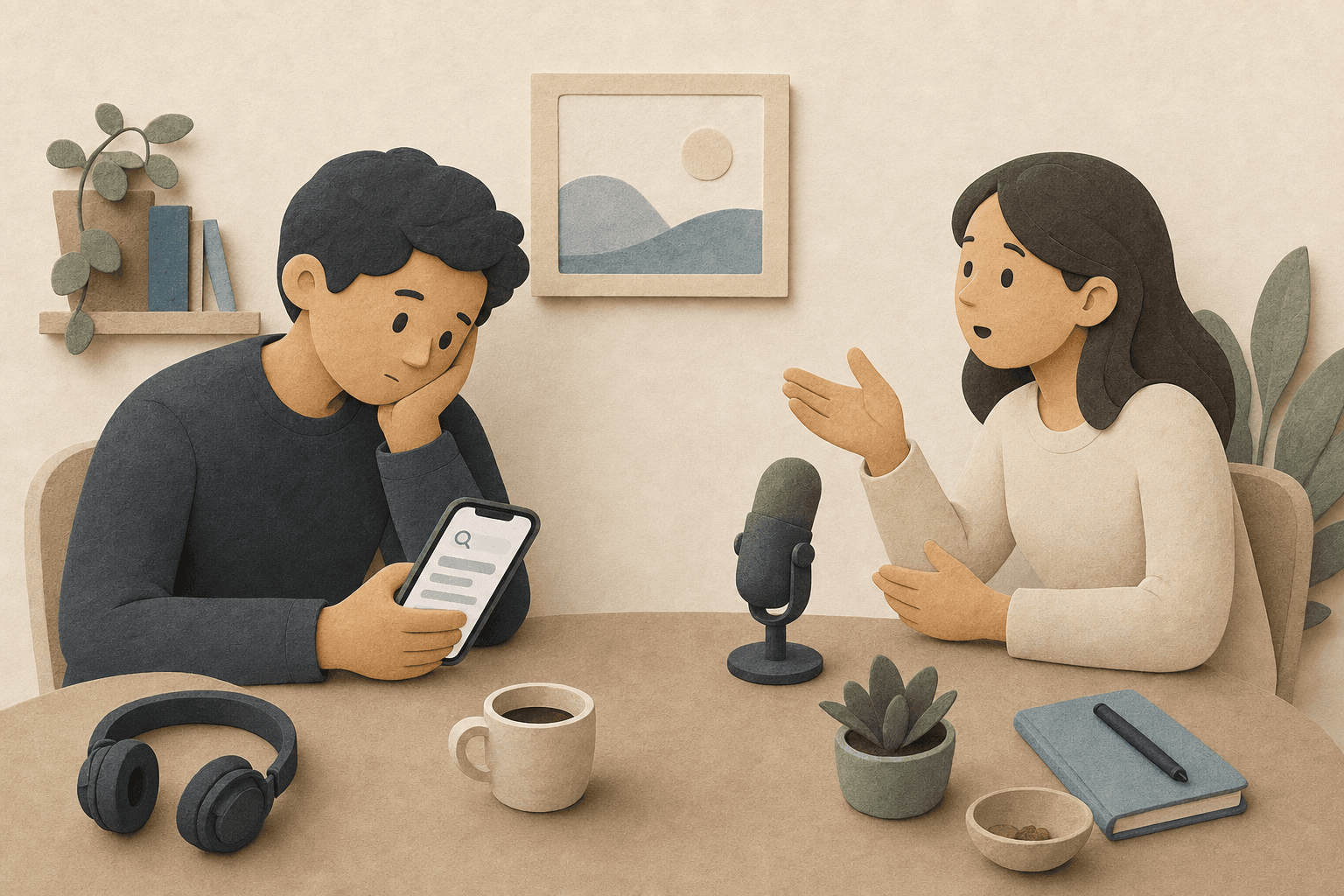
The search break is small, but it changes the room
A podcast guest mentions a book. A friend names a restaurant. Someone makes a claim that sounds interesting enough to check. The question is real, but opening search makes everyone wait, or makes you miss the next part of the conversation.
That is the search break: a real side question becomes the main event before you know whether it deserves that much attention.
Podcasts make the problem obvious
Podcasts are a clean first example because nothing waits for you. The host keeps moving, the guest adds another reference, and a search tab can pull you away from the exact context that made the question interesting.
SideThread is built for that live curiosity. Start a session, keep listening, and let the app surface a compact answer when a name, claim, place, book, or reference creates a useful gap.
The better goal is optional curiosity
Stay with the main thread
The answer should help you keep listening, not turn the moment into a separate research task.
Let small questions stay small
Some answers are worth a glance. Some are worth saving. Some are easy to ignore.
Avoid steering a chat
SideThread is not asking you to prompt a chatbot while people are talking.
Keep judgment in the loop
A compact answer can give context. Important information is still worth checking yourself.
Where SideThread fits
Use SideThread when the question matters enough to notice, but not enough to stop the conversation. It is useful during podcasts, interviews, lectures, dinner talk, and other live moments where a short answer can keep curiosity from taking over.
The product is deliberately quieter than a search session. It can notice an answerable moment, give you a short assist, and let the real conversation stay first.
What not to expect
- SideThread is not a meeting recorder, note-taking dashboard, or podcast player.
- It does not need you to run a back-and-forth chat during the conversation.
- It should not replace consent, judgment, or your own follow-up when an answer matters.